What "stops at a logo" means
In some white-label setups, only the logo on a dashboard changes. The checkout page a payer lands on, the panels merchants and managers log into, and the e-mail a payer or merchant receives can still carry the original vendor's name, domain or sender address underneath the swapped logo.
Where the brand actually shows on omwio
On omwio, checkout runs as a branded payment page on the tenant's own pay host. Invoices go out through branded mail in the recipient's language, and monitoring alerts render through that same branded mail layer, so they arrive looking like your platform. The tenant manager and the merchant panel are the surfaces merchants and managers actually work in day to day.
The platform sitting under the brand
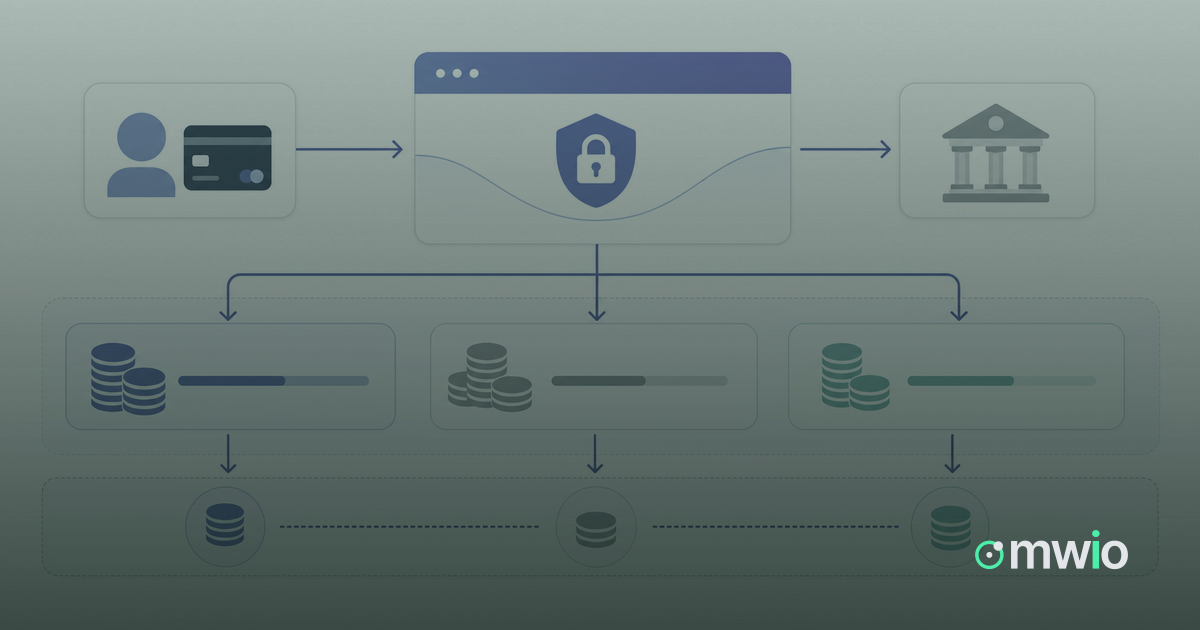
Branding only matters if there is a real platform behind it. omwio's baseline, Core, covers merchants and their contracts, transactions as one model — payments, payouts, exchanges, refunds and chargebacks — with a shared status model, multi-currency wallets with balance history, provider and MID routing with route preview, and a structured dispute workflow where a merchant can open a dispute from the merchant panel or through the Processing API. Core is present in every billing plan and cannot be switched off; it is what has to exist before any optional module makes sense.
Support and monitoring stay inside the same panels
Two optional modules extend that baseline without adding a separate vendor surface. Support inbox lets a merchant open a ticket from the transaction, invoice or wallet they are already looking at, and tenant managers work that queue inside their own panel, under the same RBAC that governs the rest of their access. Monitoring tracks provider and MID health and sends its alerts through the same branded mail layer as the rest of tenant e-mail.
Questions worth asking before you commit
Before choosing a white-label partner, it is worth checking what actually carries your brand end to end:
- Does the hosted checkout page sit on your domain, or does it hand off to the vendor's?
- Do invoices and monitoring alerts go out as your branded mail, or with the vendor's name still in the sender line?
- Do your merchants and managers work inside panels under your brand, or inside the vendor's own interface with a logo swapped on top?
- Is the API your merchants integrate against signed and hosted under your name?