The one-at-a-time habit
Some operators pay merchants out by creating each payout individually: an operator opens a form, enters the amount and destination, and sends it. There is no batch validation step and no separate approval stage before the money moves. For low volumes this feels fast. As the number of merchants and payout frequency grows, every payout still depends on one person getting one entry right, with nothing structural checking it before it leaves.
A payout is a transaction, not a one-off entry
In omwio, payouts are not a separate, lighter-weight action from payments. They sit in the same transaction model as payments, exchanges, refunds and chargebacks: a shared status model, a public token, and one collapsed status mapping that is consistent across the platform. A payout created today has the same lifecycle and the same visibility as any other transaction a manager or merchant looks at — it does not disappear into a form that was submitted and forgotten.
Wallets show what a payout touches before it moves
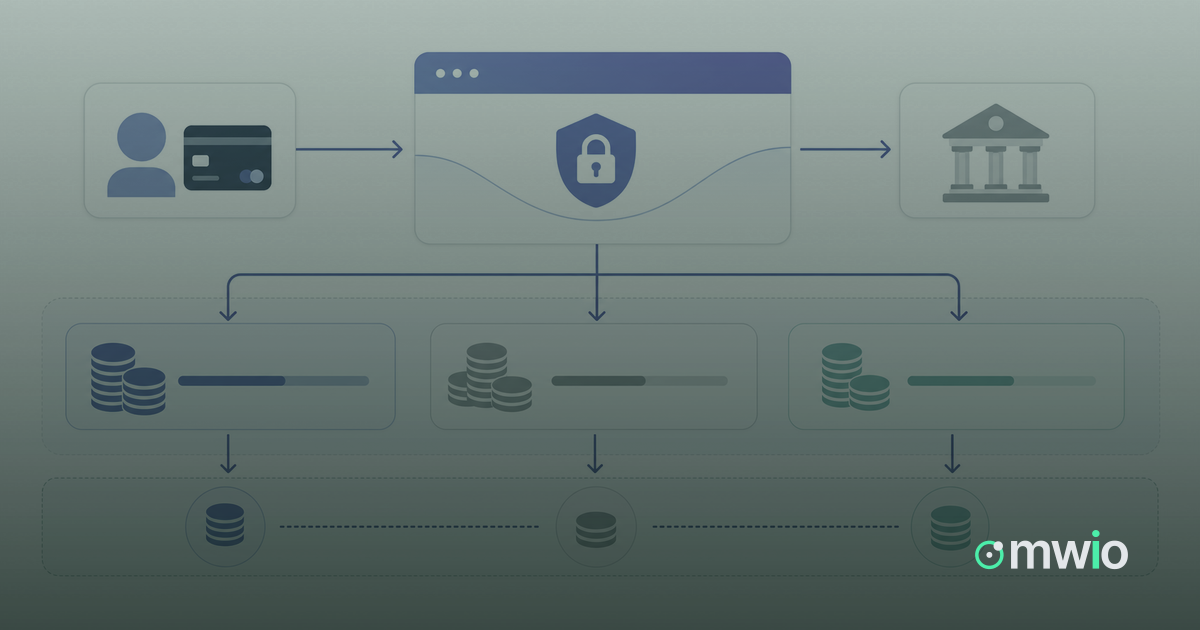
Every merchant has multi-currency wallets with balance history and reserve visibility. That means a payout is never an isolated number typed into a box — it is tied to a specific wallet, in a specific currency, with a visible history of how the balance got to where it is and what is currently held in reserve. A manager can always answer where an amount came from and what is being held, which is exactly the context a one-at-a-time process has no built-in way to surface.
Permissions decide who can act, and everything is logged
omwio's access model goes down to individual panel actions, with tenant-scoped two-factor authentication, session controls and a recorded trail of administrative activity. That makes it possible to separate who can create a transaction from who holds broader access, and it means every action taken on a payout is attributable after the fact. A process built around one person creating each payout directly has no equivalent record of who did what, unless it is built and maintained separately.
Reconciliation is where gaps get found
The accounting and reconciliation module ties payouts back to the books. Settlements cover payouts to merchants against a named MID, provider statements are matched against platform transactions on amounts, references and timing windows, and treasury shows reserved, frozen and free funds per currency at any point. This is the stage where a payout created without any structural check eventually gets tested against what actually settled — and where differences between the two are easiest to catch early rather than during a month-end investigation.
What this changes in practice
The difference is not speed on a single payout — it is what exists around that payout afterward: a status history, a wallet record showing the balance it drew from, a log of who acted on it, and a reconciliation process that checks it against provider statements. None of this replaces an operator's judgment; it gives that judgment a record to stand on.