What payment routing is for
Payment routing is the step between a transaction being created and a provider actually processing it. On a white-label payment platform, a single merchant can be connected to several providers at once, each with its own payment methods, currencies, and processing characteristics. Routing decides which of those connected providers receives a given transaction, rather than sending everything through one fixed path.
How a transaction gets matched to a provider
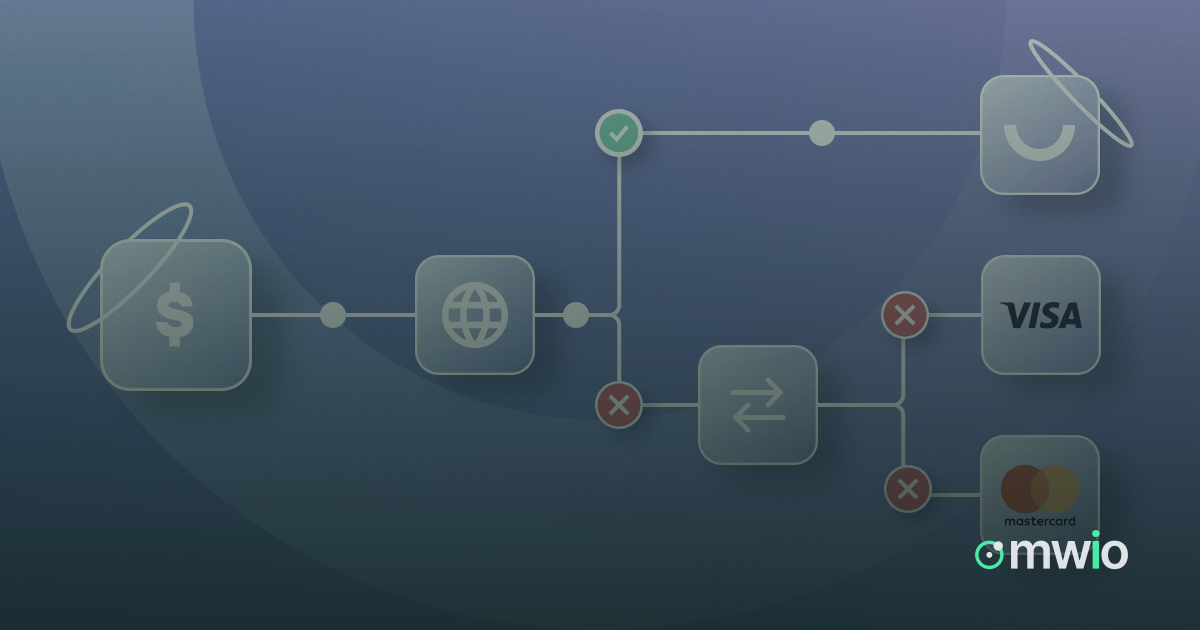
Each incoming transaction carries a set of characteristics, including which merchant it belongs to and which payment method is being used. Routing rules compare these characteristics against the providers connected to that merchant and select one according to the conditions that have been configured. When more than one provider could potentially handle a transaction, the rules decide which one is tried first, and where the transaction is redirected if a fallback is needed.
Why routing rules shape approval outcomes
Providers differ in which payment methods, currencies, and transaction types they can process, and in how they handle declines. Rules that send a transaction to a provider genuinely suited to its characteristics reduce the risk of it reaching a provider that is not set up to handle it. That is why routing is treated as an operational lever rather than a purely technical switch: the rules themselves affect how many transactions end up being processed.
Why routing rules shape cost
Providers also differ in their fee structures and in the cost of processing specific payment methods or currencies. Because routing determines which provider actually handles a transaction, routing rules indirectly determine which fee structure applies to it. Rules configured without attention to cost can send transactions to a provider that is more expensive for that particular case, even when another connected provider could have processed the same transaction just as well.
Where routing lives in omwio
In omwio, provider routing sits alongside merchant and transaction management. The manager panel is where routing rules are configured across the providers connected to a merchant, and the merchant panel gives visibility into how transactions were processed, including which provider ultimately handled them. Wallets and hosted checkout sit downstream of this decision: whichever provider routing selects is the one that ends up processing the payment collected through checkout.
Reviewing routing rules
Because routing rules apply to every transaction, a small misconfiguration tends to show up repeatedly rather than as a one-off. Reviewing routing periodically is a basic part of keeping both approval behavior and cost under control.
- Confirm which providers are connected to a merchant and what each one is configured to handle.
- Check that rules route by characteristics that actually reflect provider capability, not outdated assumptions.
- Revisit rules whenever providers are added, removed, or their terms change.